

By Amber Byfield
Nature is endlessly inspiring to me. When I’m not working, I try to spend as much of my time immersed in it as possible, from bird walks around my neighborhood to contemplative swims in Barton Springs. And happily, my day job as a Senior Collaboration Manager at Butler revolves around nature, too.
Our brand studio is focused on working with organizations that steward, protect, and promote the natural world. And we often get to collaborate with and learn from a variety of experts from disciplines across the more-than-human world — like those at Biomimicry for Social Innovation, where they help leaders across disciplines learn to apply nature’s intelligence to cultural challenges.
Natural Problem-solvers
You may have heard of or even experienced biomimicry being used to solve design problems. One of the most famous examples is when the nose of the bullet train in Japan was redesigned to mimic a kingfisher’s beak, eliminating loud sonic booms in tunnels. Here in Austin, the Blanton Museum boasts a forest of calla lily-inspired shade structures, which, like the flowers themselves, collect rainwater and store it underground. And biomimicry is at play something we probably all have nearby: hook-and-loop fasteners (commonly known by its brand name Velcro) were inspired by the burdock burrs stuck to Swiss engineer George de Mestral’s dog’s coat.
But instead of using biomimicry to solve engineering or product design problems, BSI is focused on using it to solve human problems. Founded by Toby Herzlich, BSI helps organizations apply evolutionary intelligence to improve the ways humans work together.
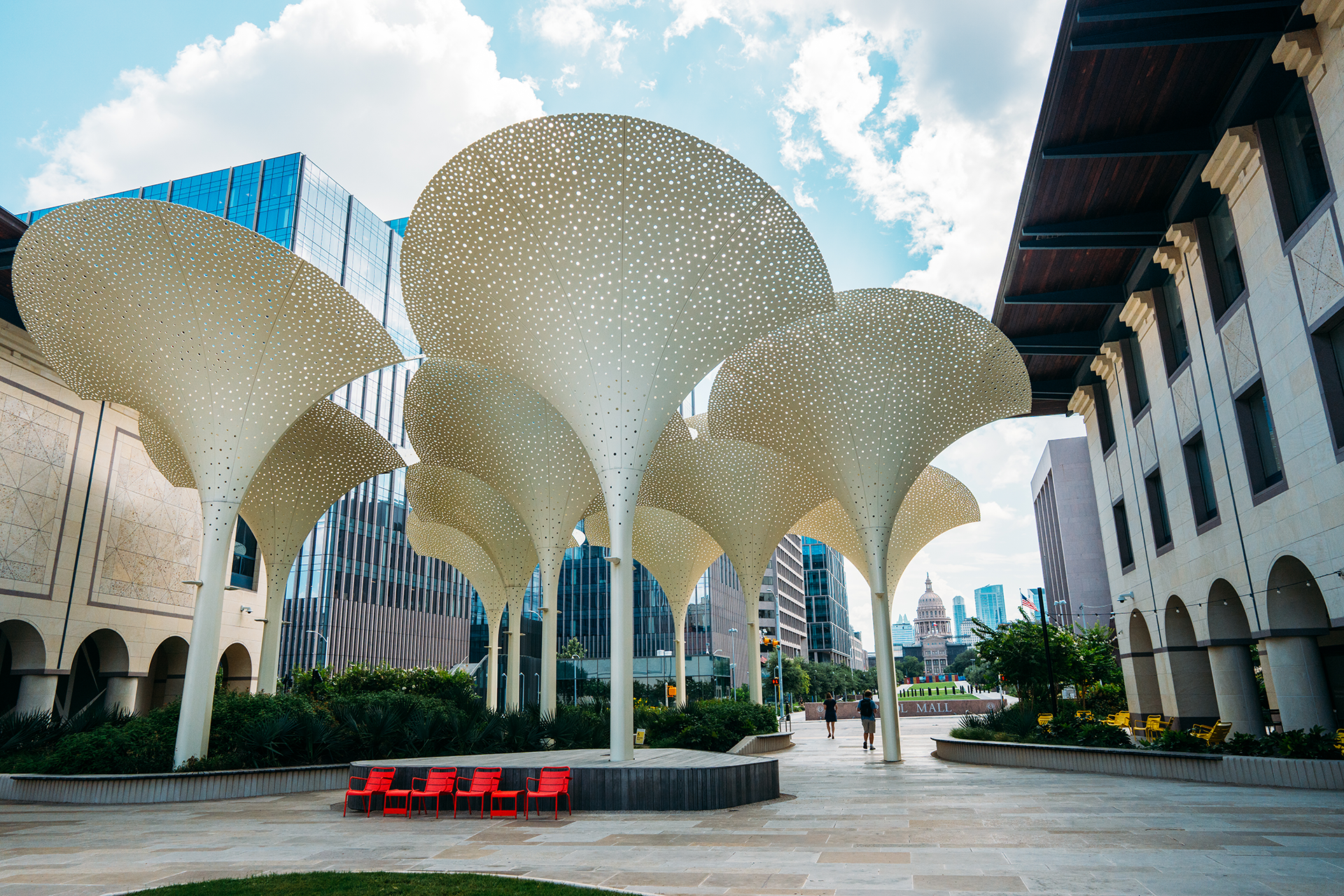
The Petals by Snøhetta at the Blanton Museum of Art in Austin, Texas.
Schooled by Wildflowers
So we’re talking about nature and human behavior? Sign me up. Earlier this year, I enrolled in one of BSI’s Nature Positive Practices courses. Throughout this 8-week course, my fellow students and I were encouraged to explore our local ecosystems and open our eyes to the collaborators that can be found right in our own backyards.
In mine, I learned from the native wildflower seeds I’d sown in my garden. After a nasty ice storm, I thought they might be goners. Yet when the ice melted, I found tender green leaves reaching toward the light. How did these tiny little leaves have the resiliency to survive such a harsh environment? Because even though it wasn’t visible, there was already a well developed root system supporting them.
This reminded me of the organizations we work with — conservation groups, civic institutions, purpose-driven companies. They all have really developed root systems — important missions that are the foundation for some really big and consequential work. But their brands, the things above the surface that people actually see, are often far less developed.
This one example made me curious. If I looked beyond my own backyard, what other wisdom from the natural world could be applied to the brand work we do every day?
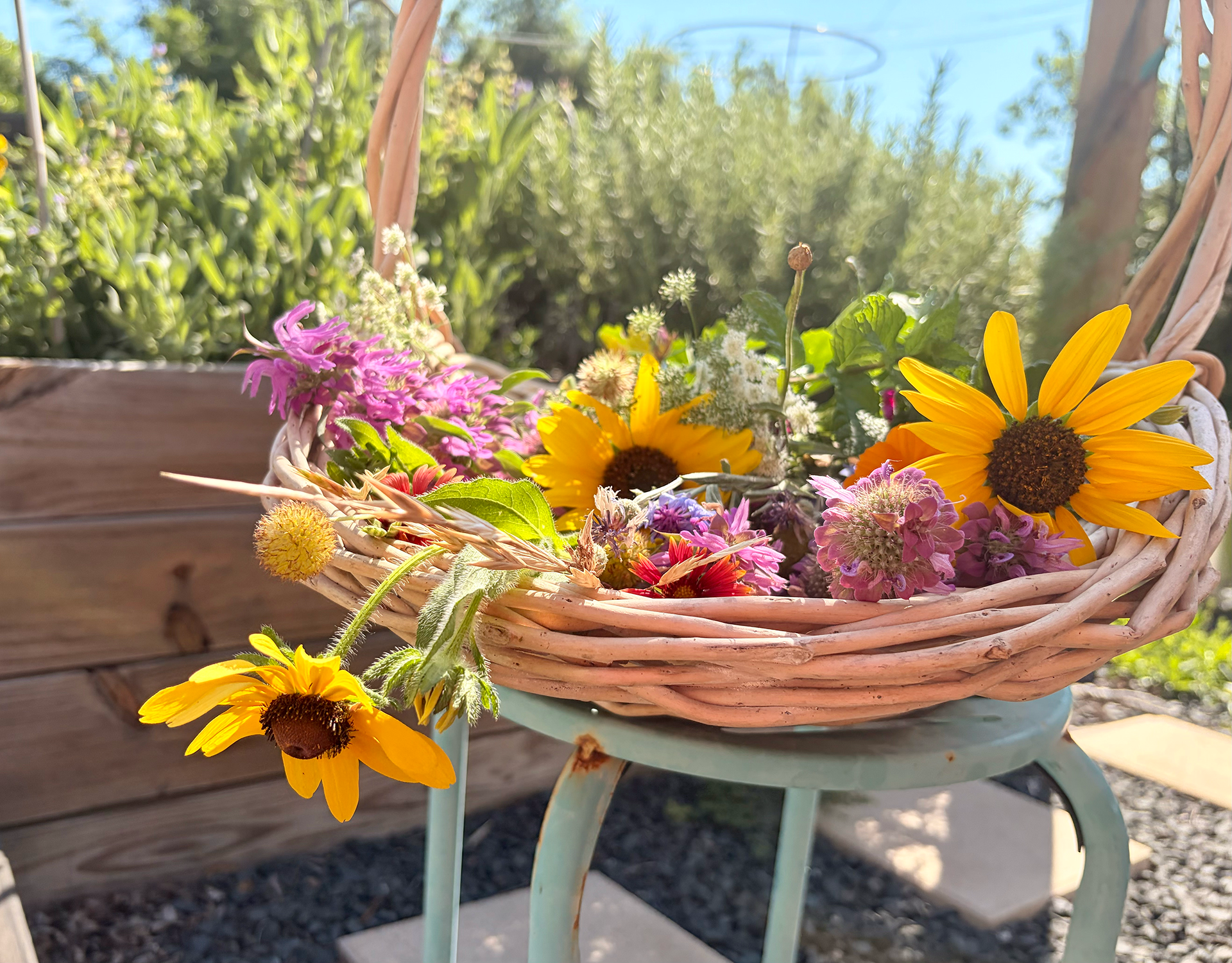
Harvest of wildflowers from my backyard.
Cellular Plan
The more-than-human world has myriad teachers. Everywhere we direct our attention, we’re sure to find wisdom in the 3.8 billion years of evolution that exists all around us.
Take slime mold, for example. Often found on forest floors, it is a single organism that can navigate really complex environments with extraordinary efficiency — finding the shortest path, routing around obstacles, distributing resources intelligently. Slime mold has no brain, no central command, no leader. No one is in charge. And yet, it moves with purpose.
The reason, as our friends at BSI explained, is that the intention is present throughout the entire organism. There’s no gap between what the organism is trying to do and what it actually does. Their intelligence isn’t concentrated at the top. It’s everywhere, all at once.
We spend a lot of time helping organizations define what we call their intention statement. It’s a clear, distilled statement of purpose that guides every brand decision, from the tagline to the visual identity to the messaging of an advocacy campaign.
For this to work, the intention can’t live only in the strategy deck or in the minds of the leadership team. It has to travel all the way through the organization, coded into every cell. When it does, there’s no gap between how the organization behaves, and how the brand operates.
A clear intention, deeply encoded within each individual, aligns an organization — and makes its brand easier to operate, more adaptable as new challenges arise, and more enduring over time.
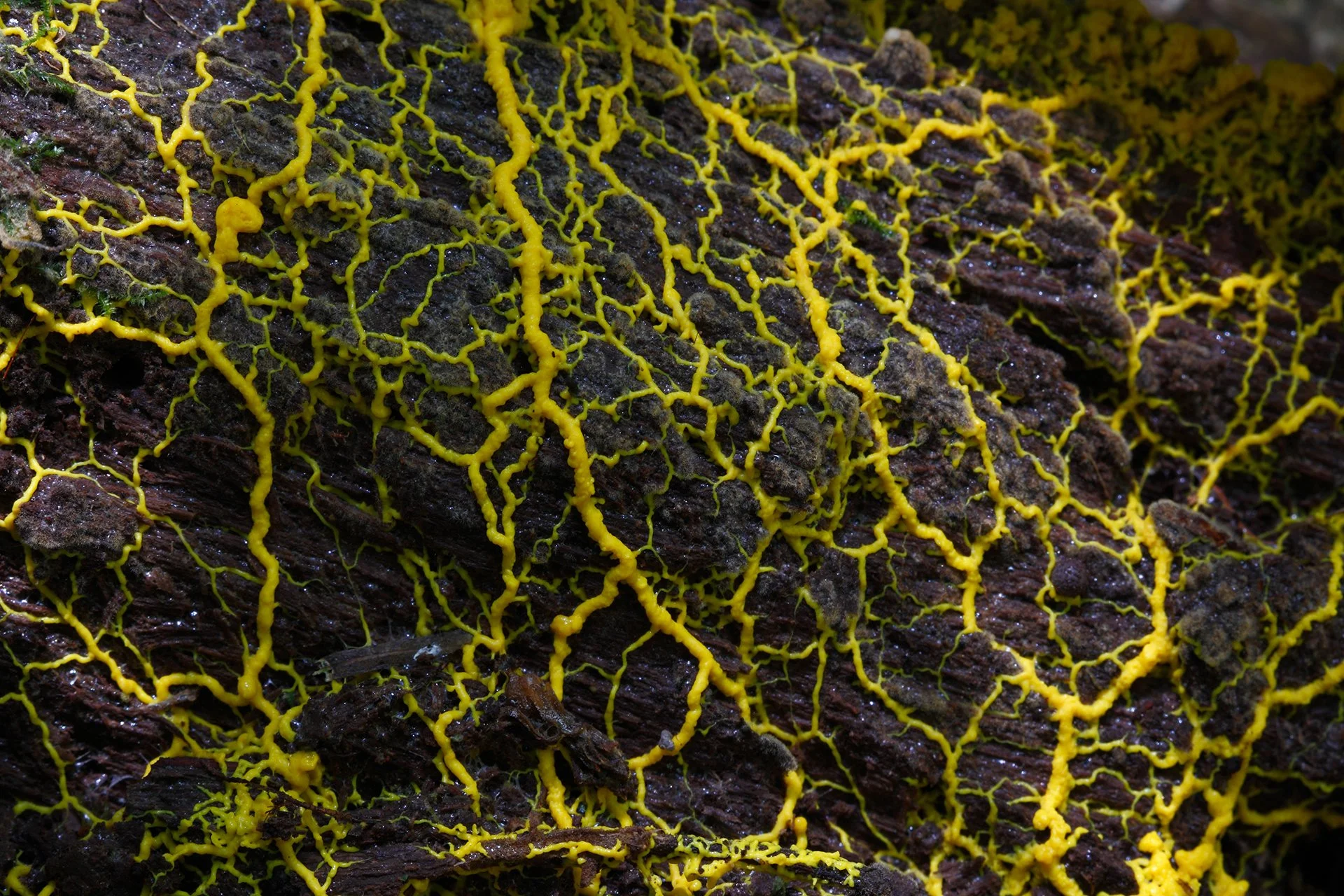
Slime mold network on the forest floor.
Keep On Pollinating
We’re always looking to connect with new ideas and people, to learn more about collaborating and connecting in the more-than-human world. If you work for a company, nonprofit, or civic institution in the nature space and would like to ask us a question about your brand, email me at amber@withbutler.com.